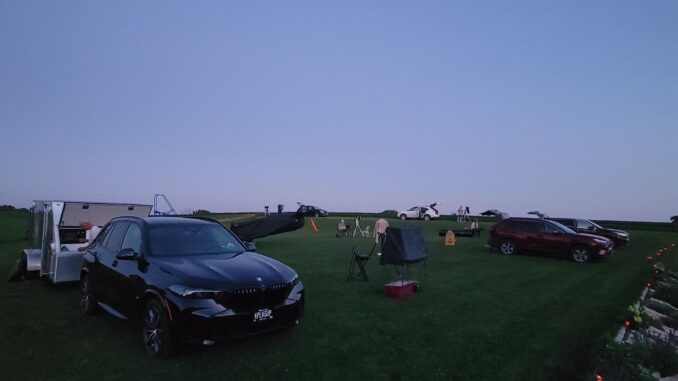

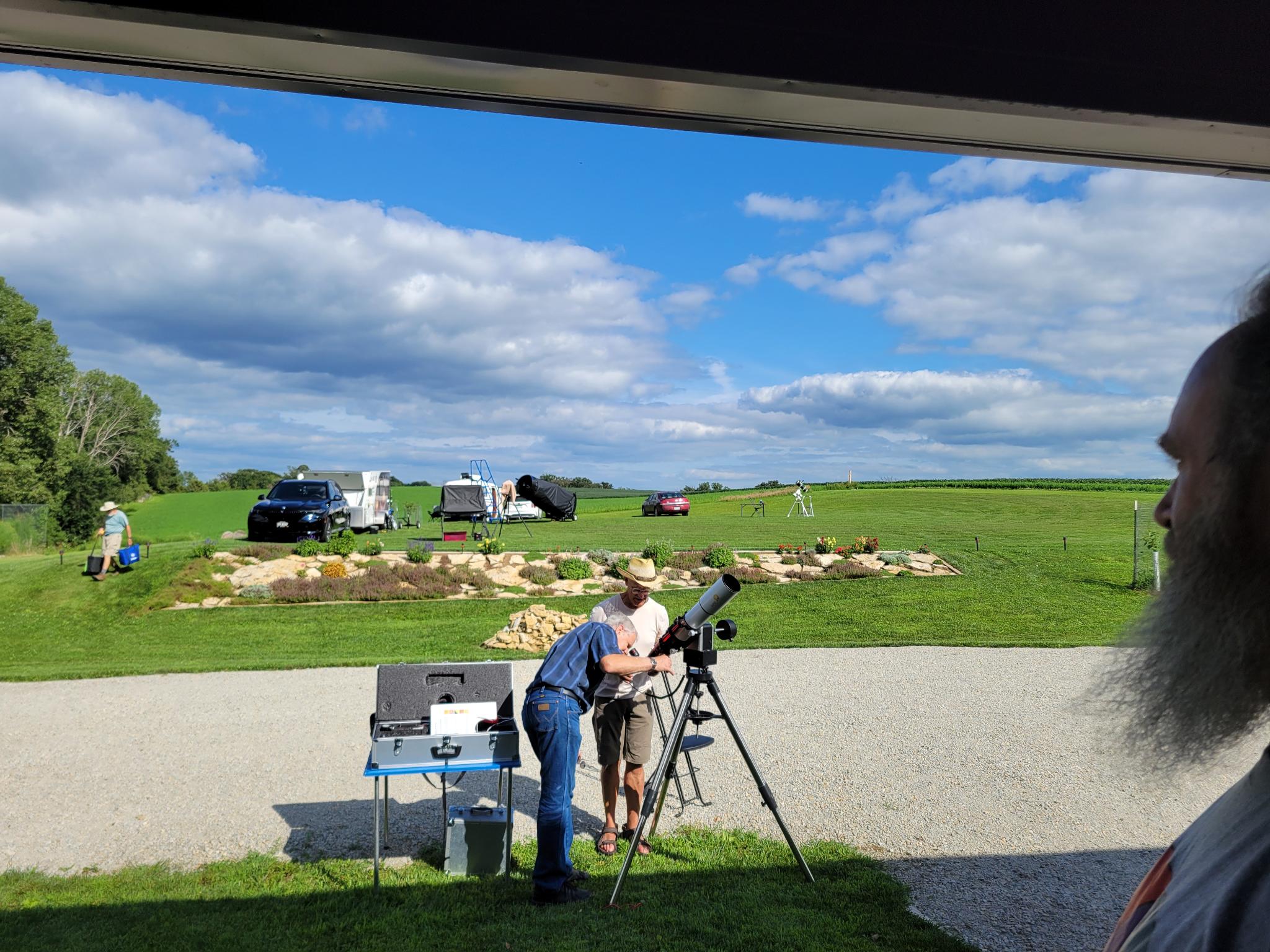
This year, the club once again hosted StarBQ (spelled Star-B-Q: a Star Party and Barbeque) for its members. The original plan was for Friday and Saturday, August 14-16, but the weather didn’t cooperate. The weather was looking better for Sunday, August 16, so Plan B was activated. The afternoon started with sun-gazing at DJMOF (Dean Johnson Memorial Observing Field), followed by grilling, food preparation, and socializing. Many people came just for this part and couldn’t stay all night because they had work to do on Monday morning.
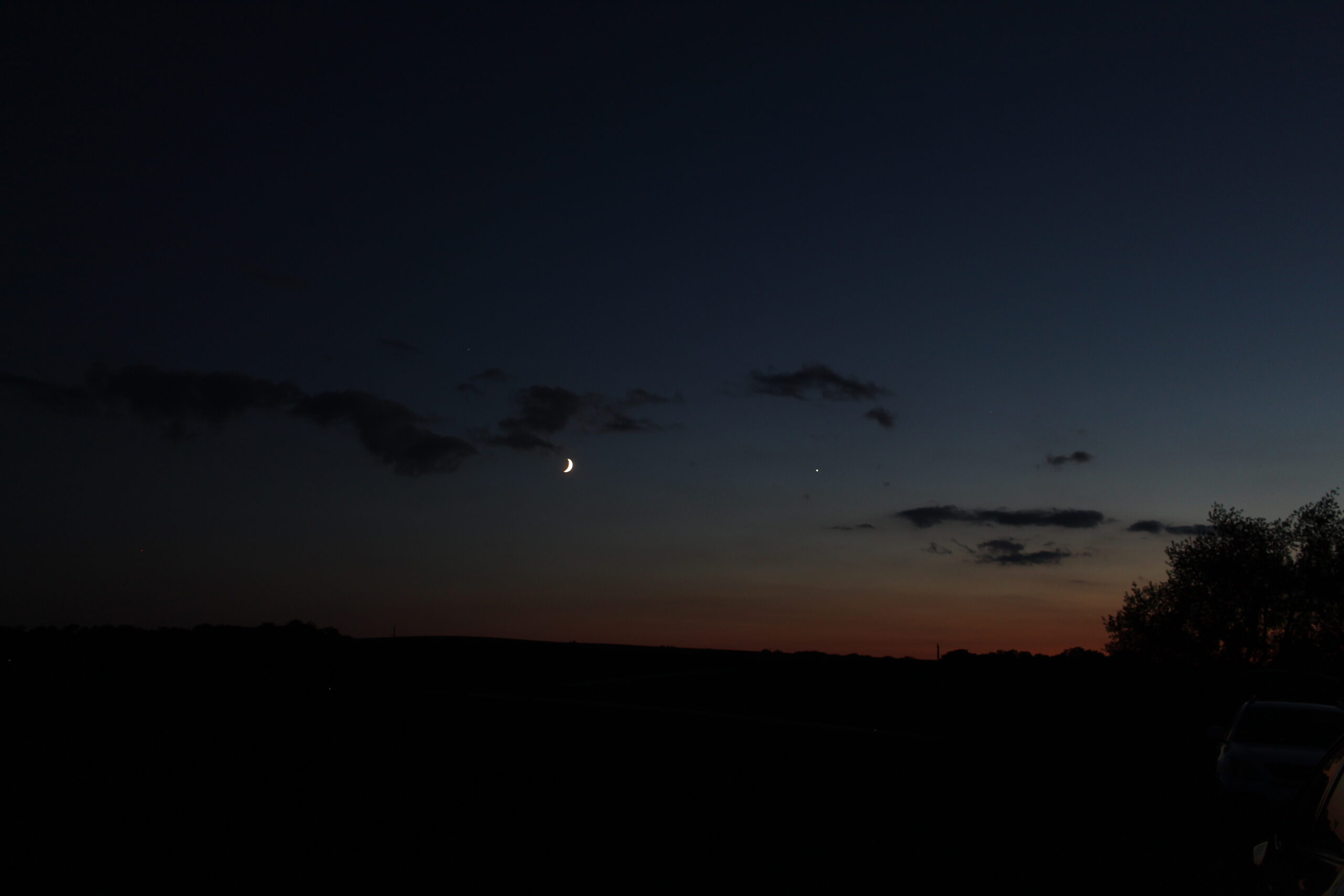
The sky cleared in the evening, and right after sunset, the shadow of the Earth and the belt of Venus began to rise in the east. In the west, a crescent moon with brilliant Venus shone. But the crescent moon didn’t bother the astronomers at all; it’s always a nice sight to see, and it set quickly. Venus 4.2 mag at a distance of 0.67 AU also showed a 48% crescent phase with a diameter of about 24 arcsecs.
The real spectacle came after astronomical twilight. Many fast Perseid meteors were visible. The slow-moving Kappa Cygnids could be active in mid-August, or simply random meteors. However, the main spectacle was provided by our own Galaxy, the Milky Way. Its belt stretched across the entire sky with a clear dark dust division. The center, of course, stood out in the constellation Sagittarius. Visibility was excellent until midnight, many objects could be seen with the naked eye or binoculars. In short, a glorious night for astronomy, as the unforgettable Dean Johnson would say.
After midnight, alternating clouds began to creep in and only the hardy ones remained to observe, but it was certainly worth it.
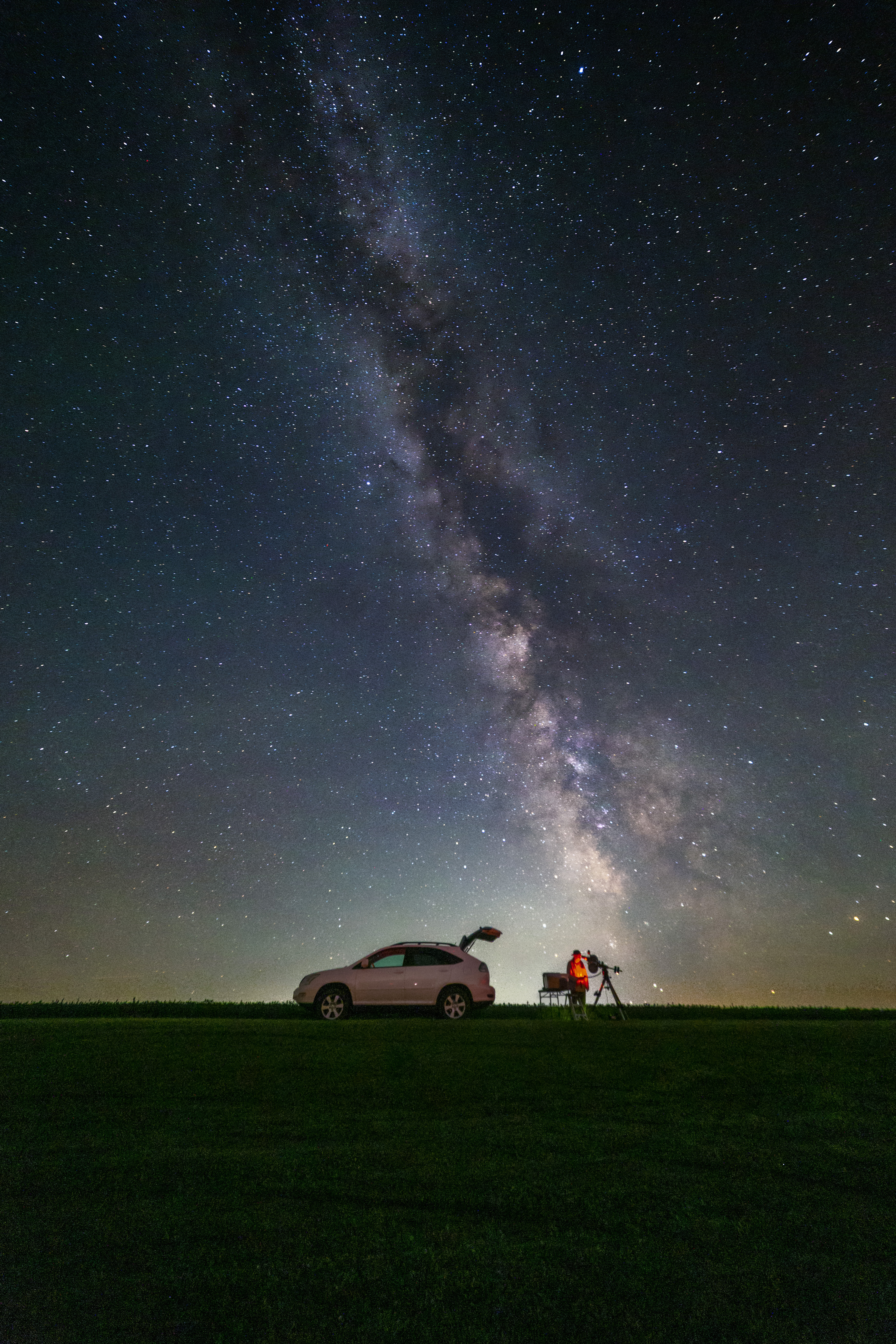
This image was captured using a Canon 6D paired with a Samyang 14mm f/2.8 lens, stopped down to f/4. It was exposed for 30 seconds at ISO 3200 and post-processed in Adobe Lightroom, Photoshop, and StarNet++.
Click to the picture above to see full image in new tab.
More then 25 minutes of the Earth shadow rise compressed into 31 seconds