
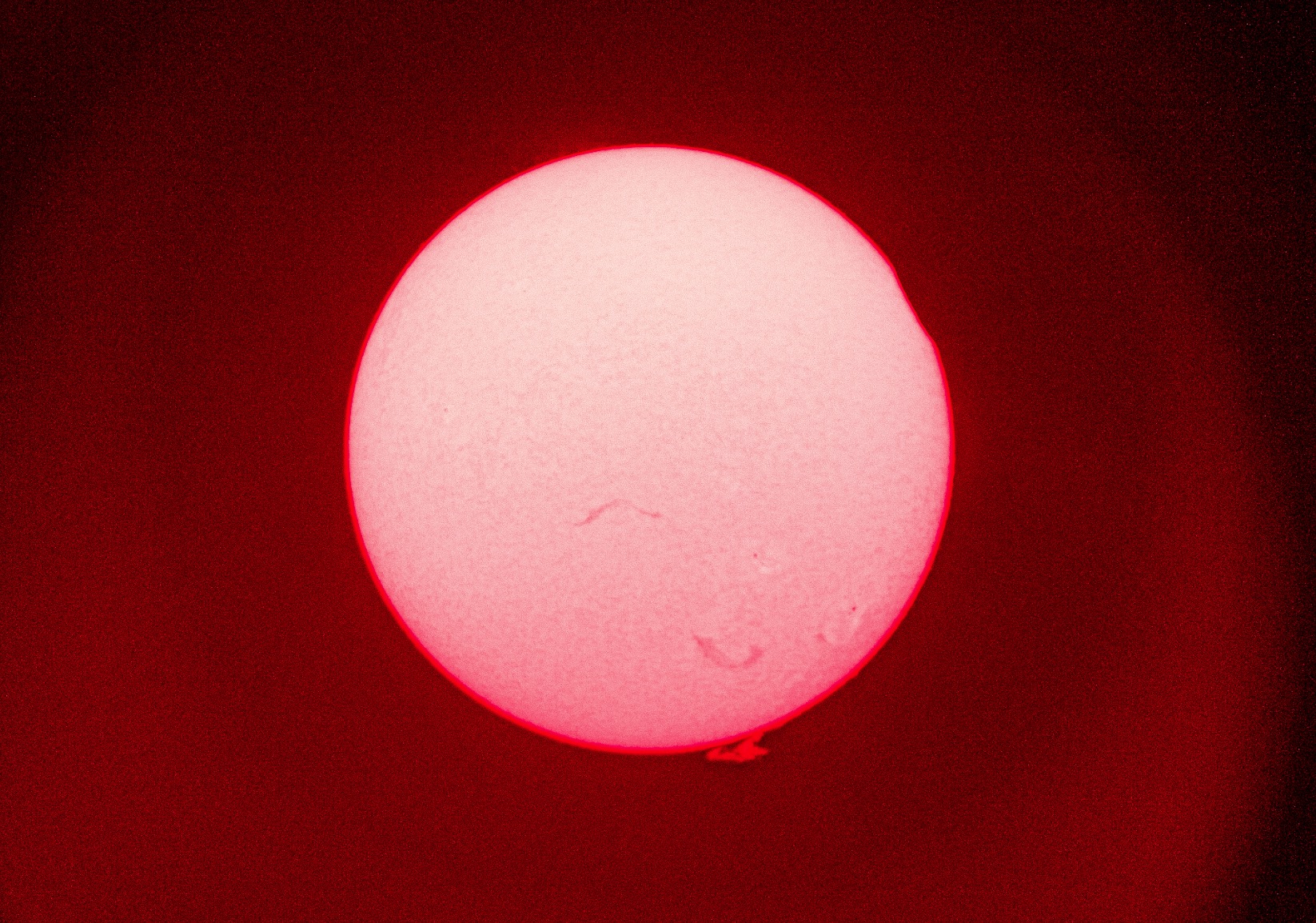
Two weeks after the total solar eclipse, a lunar eclipse occurred. The total eclipse was only visible in a narrow strip that ended in Spain and the Mediterranean Sea. In Rochester, the Moon only slightly licked the Sun, it was a partial solar eclipse. As the H-Alpha photo below documents, the Moon only covered a tiny part on the right.
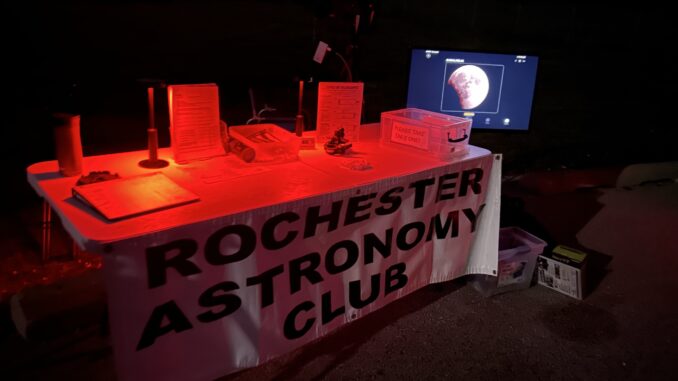
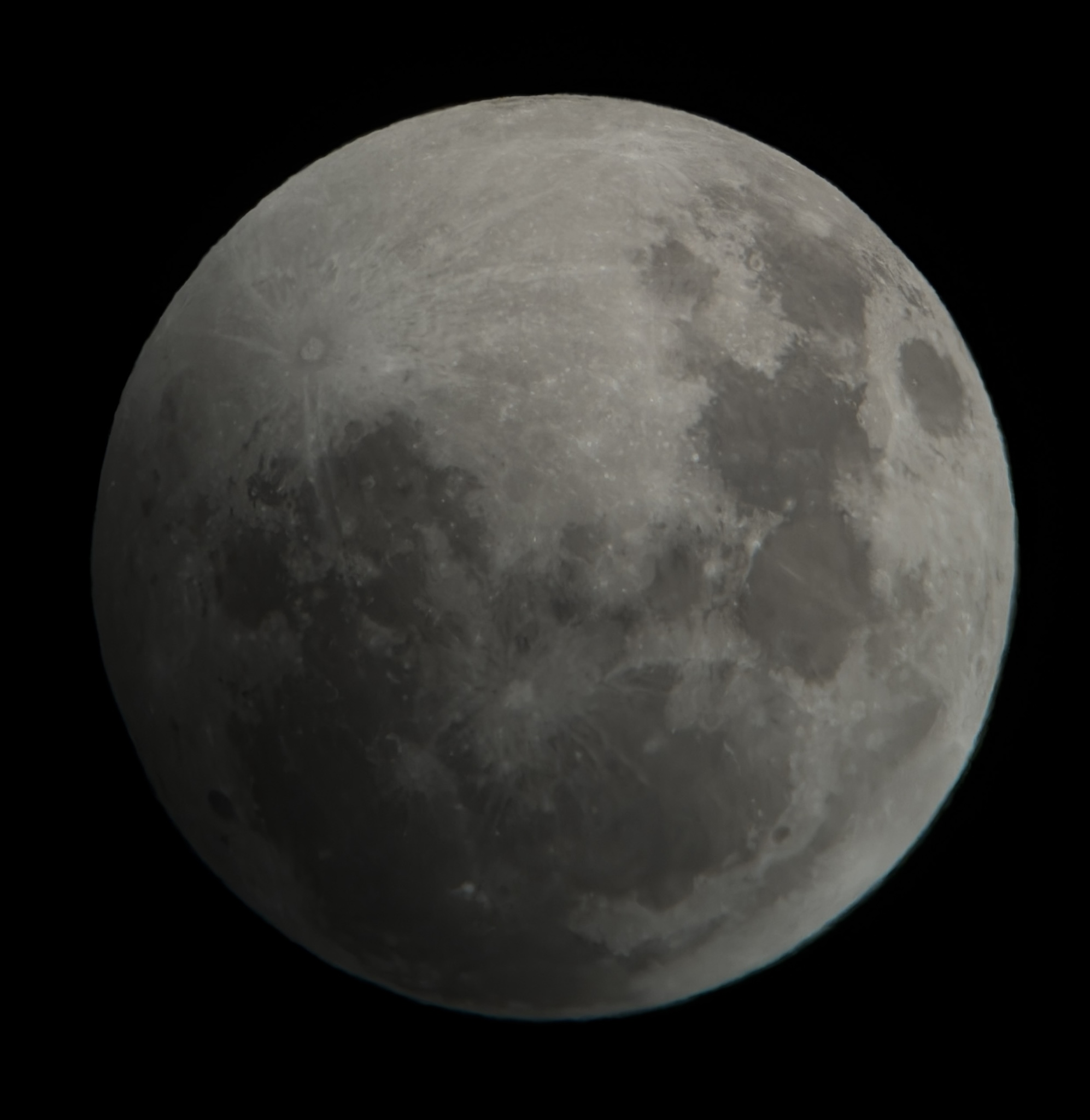
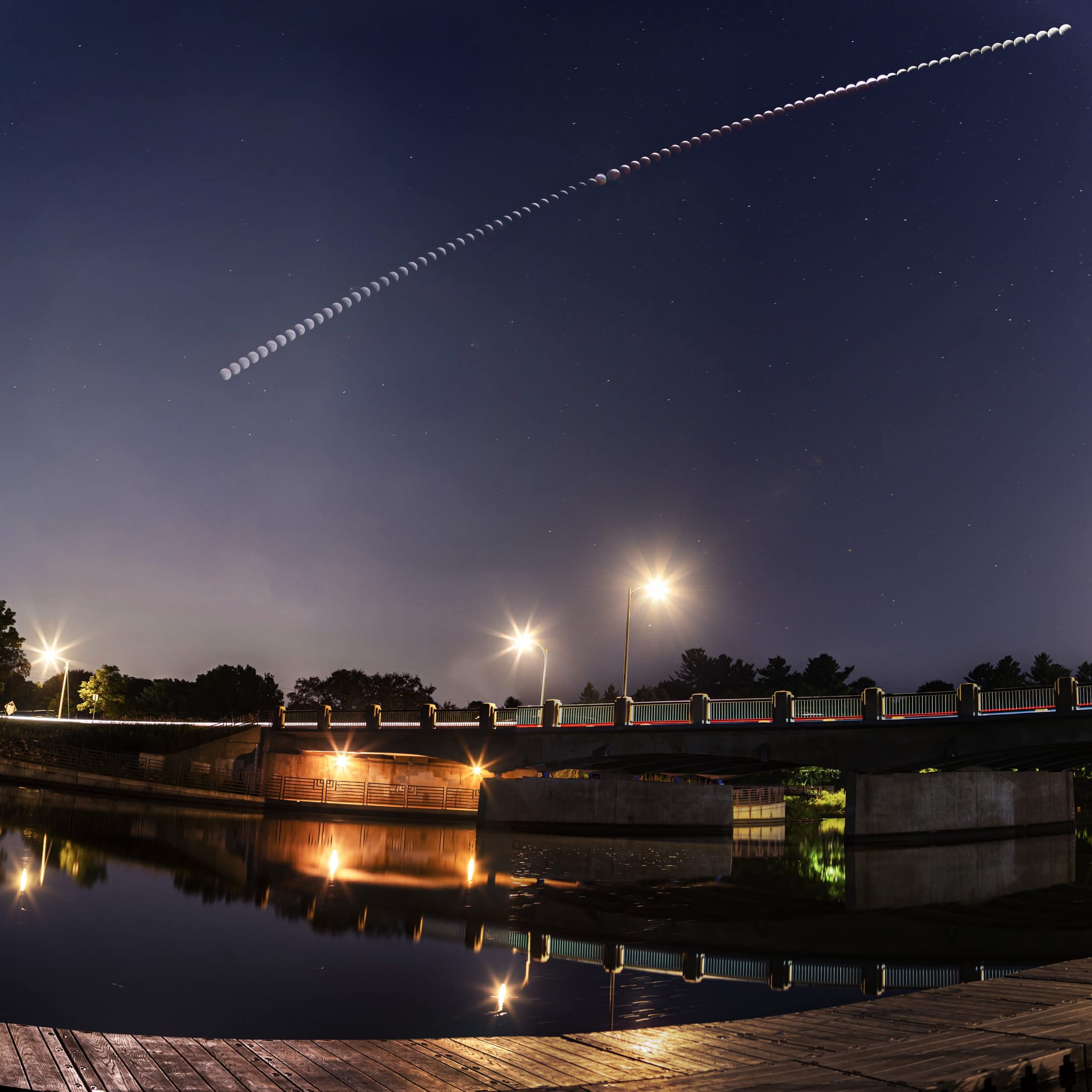
On the other hand, the partial lunar eclipse was visible from the half of the Earth where the Moon was above the horizon. The maximum phase reached 93%. The club members organized a public viewing at Dog Park North. It was the first such observation in this location. It is 2 miles north of Watson and seems to be a good place for public viewing with plenty of open space.
A full moon rises on the opposite side of the Sun and also sets on the opposite side of the Sun. This means that the moon’s disk is visible in the Earth’s shadow or directly in the belt of Venus. The two videos below, one before the eclipse and the other the morning after, illustrate this fact.
Josef Chlachula: Rise of the Full moon on evening August 27 as seen from Root River Park access road.
Josef Chlachula: Set of the Full moon on morning August 28 as seen from Dakota Middle School parking.
The next lunar eclipse will be a penumbral eclipse on February 27, 2027. Such an eclipse is, of course, almost imperceptible to the naked eye, but can be captured photographically.