
Home › Forums › RAC Main Forum › General Discussion › 2025 Observing
- This topic has 21 replies, 4 voices, and was last updated 4 weeks ago by
 fealeybob14.
-
AuthorPosts
-
April 8, 2025 at 5:50 pm #15366
Nice images Rob! Lots of tutorials on Siril online. Maybe you can briefly mention your experience with this tonight !
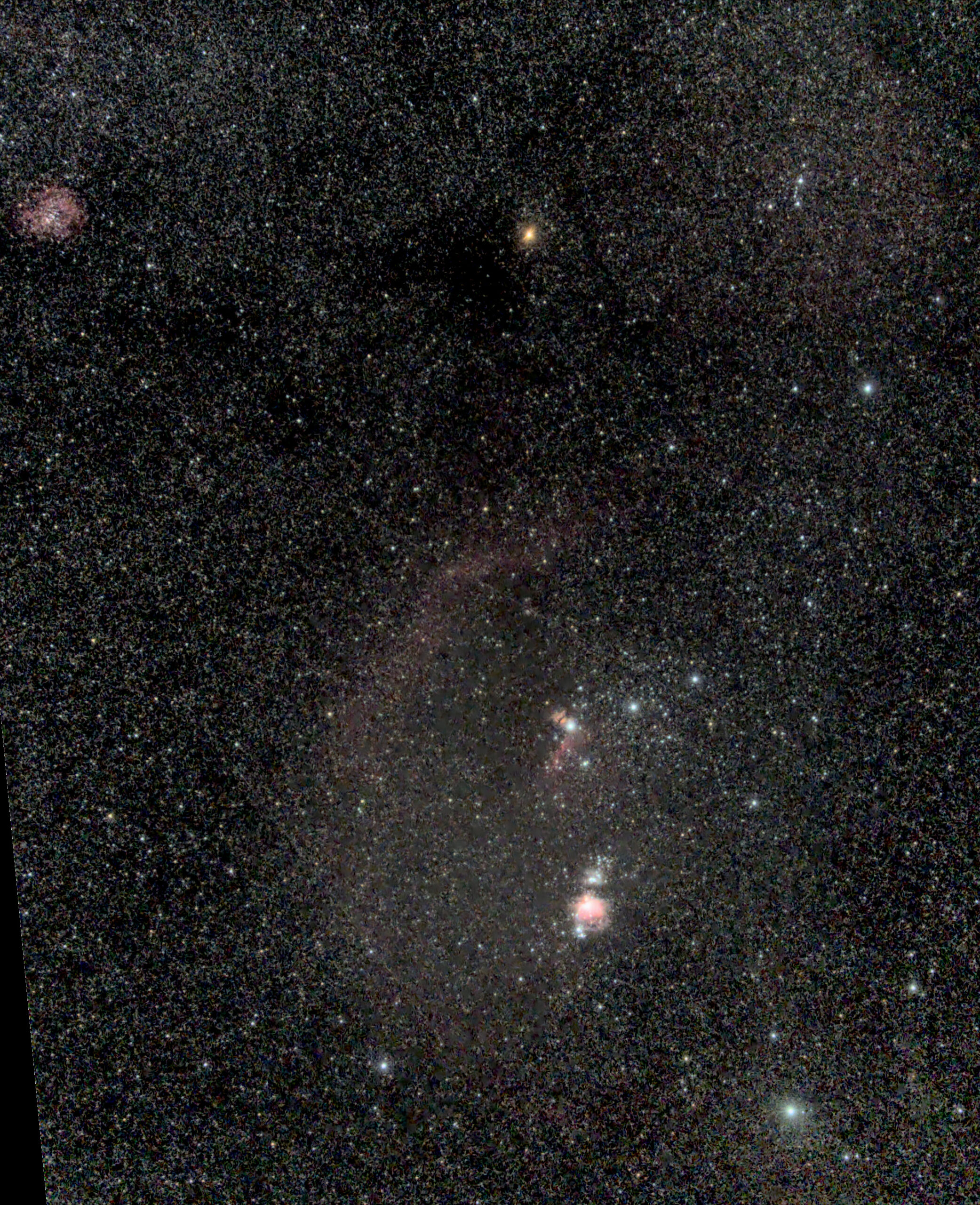
April 8, 2025 at 6:18 pm #15367Thanks. StarNet++ is a neural net trained to recognize stars so they can be separated from non-star features like nebulae. Siril has a nice interface for using that to stretch the brightness of the stars separately from the nebulosity, so that the final result isn’t just a bunch of white stars and looks more “natural”, even though it is of course completely unnatural.
Here’s Orion *and* the Rosette at 38 mm. It could have used more time than 65s., but clouds were flying in.
Attachments:
May 6, 2025 at 8:36 am #15381For several days now, there has been a large spot in the sun visible to the naked eye, through protective glasses of course.
 October 26, 2025 at 12:17 pm #15544
In the good old times almost everyone was publishing on forum observing tonight? That topic had so many pages that it made sense to stop it and create topics 2024 observing or 2025 observing
Of course, everyone can start their own topic, and it is OK. The problem is that nobody knows about it, unless one would go on a regular basis to the forum and search what is new.
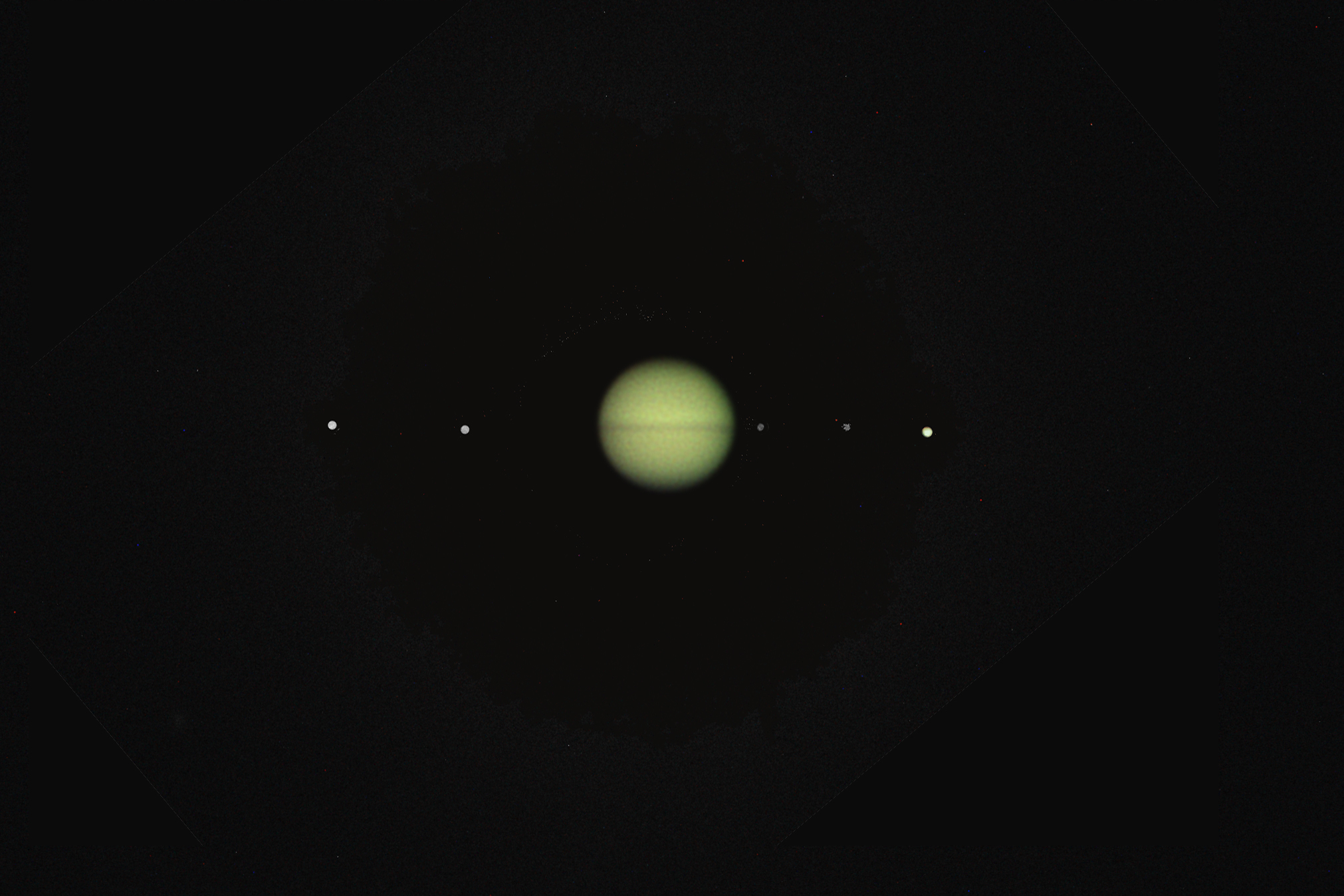
I would suggest limiting the number of topics. We could create next year, let’s say on January 1st topic 2026-observing and EVERYONE interested would reply and check “Notify me of follow-up replies via email”. Then people would be notified about new messages/replies.November 23, 2025 at 11:31 pm #15549Observing tonight with the 10 inch Meade SCT. Saturn and its moons was the target. While the eyepiece appearance can nicely reveal the planet and moons together, imaging often means exposing the planet and moons separately and combining them when processing the final image as below.
The moons (I think) left to right, are Rhea, Tethys, Enceladus, Dione and Titan.
Attachments:
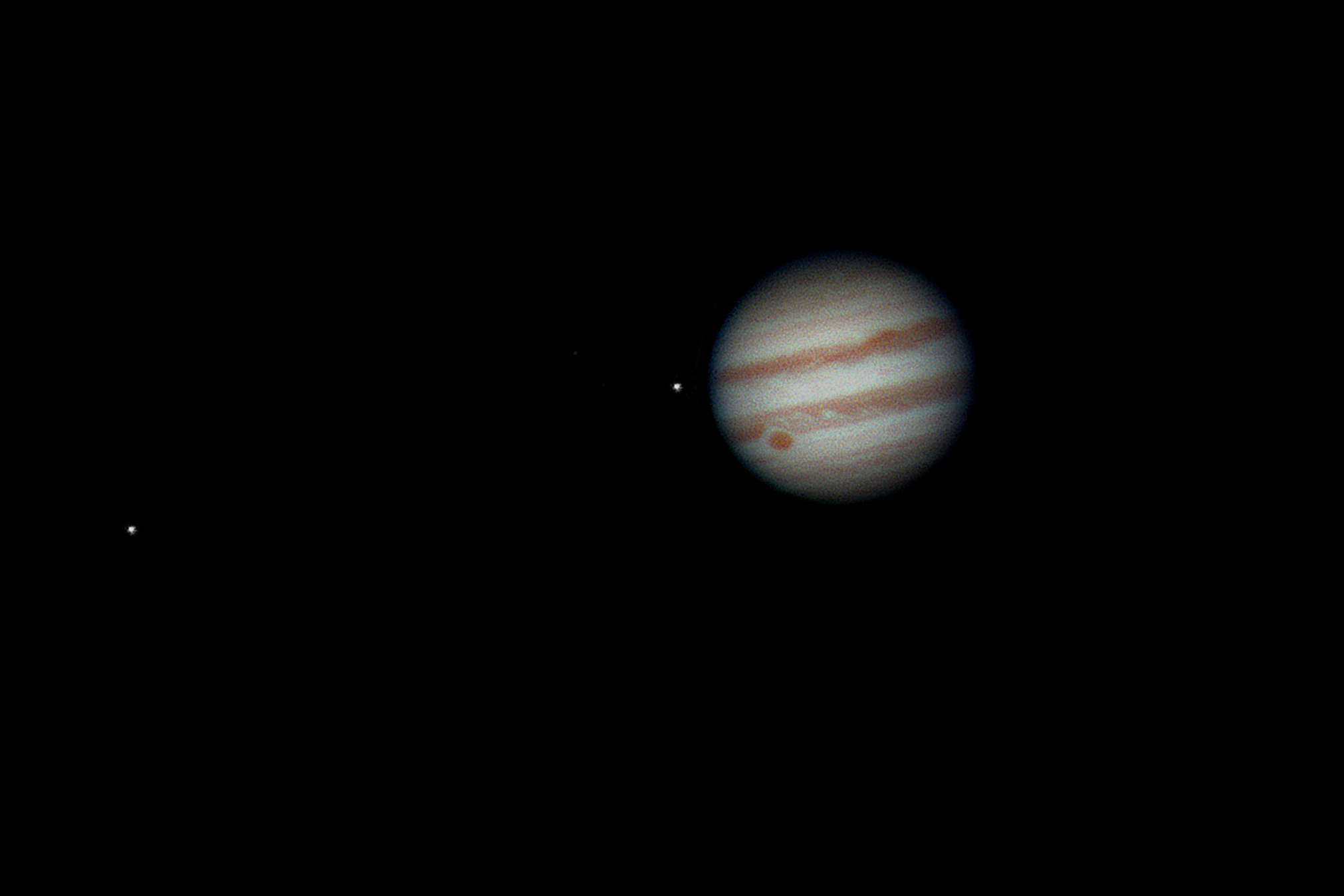
February 25, 2026 at 3:20 pm #15622On 2/24/2026 Jupiter was observed and photographed. Stellarium indicated the Red Spot would be visible. I just had to get out to a picture (shown below). A 10 in. SCT was used and a composite image was made.
Attachments:
-
AuthorPosts



- You must be logged in to reply to this topic.